.png)

Celastrus scandens
American bittersweet
(if you have a better photo, we'd love to use it!)
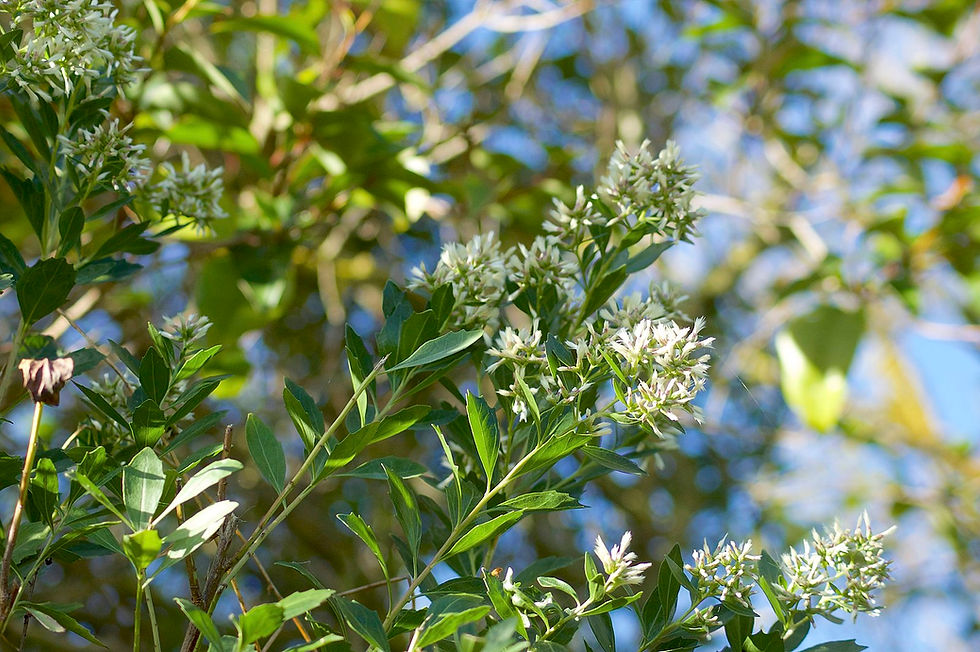
Celastrus scandens, American bittersweet, is a vigorous native woody vine that weaves through woodland edges and hedgerows, often climbing 15-30 feet into nearby shrubs and trees. In early summer it produces small greenish-yellow flowers, but the real show begins in fall when clusters of orange capsules split open to reveal bright red seeds that persist well into winter.
American bittersweet grows best in full sun to partial shade and average, well-drained soils, and naturally occurs along forest edges and thickets with species such as Cornus racemosa, Viburnum dentatum, Rhus typhina, Prunus serotina, and Quercus spp.
Ecologically, this vine provides valuable late-season food for wildlife. The colorful fruits are eaten by many birds including American robin, gray catbird, and cedar waxwing, helping disperse the seeds across the landscape.
The foliage also supports a variety of insect herbivores, contributing to the broader woodland food web. In naturalistic plantings it can be trained along fences, arbors, or allowed to scramble through shrubs where its fall fruit display adds structure and seasonal interest.
When planting, it’s important to ensure Celastrus scandens is used rather than the invasive bittersweet Celastrus orbiculatus, which aggressively outcompetes this native species in many eastern forests.
photo by Krzysztof Ziarnek, Kenraiz