.png)
In Defense of Snow: How All This White Stuff Is Actually Doing Your Garden a Favor

We here at Blue Stem Natives are pretty stoked about the snow this year but we get that not everyone shares our excitement.
The calendar says spring is almost here. The seed catalogs are stacked by the couch. It feels like winter has lasted a decade. And yet…there is still snow on the ground.
If you’re looking out the window wondering whether winter plans to personally spite you this year, you are not alone. Spring fever has officially set in across New England. But before we collectively shake our fists at the snowbanks, let’s take a moment to reframe what’s happening - because that lingering snow is quietly doing some very important work for your gardens.
Think of it less as winter refusing to leave and more as nature doing her job well.

**Snow Is Nature’s Slow-Release Fertilizer**
Snow isn’t just frozen water - it’s also one of the best delivery systems.
As snow falls, it captures tiny amounts of:
Atmospheric nitrogen
Dust particles
Organic matter
When it melts slowly (key word: slowly), those nutrients are gently released into the soil, right where plant roots can access them. This is especially beneficial for native plants, which evolved to thrive without synthetic fertilizers and prefer low, steady nutrient inputs over sudden spikes.
In other words:
Snow is doing the fertilizing so you don’t have to.
**Snow = The Best Blanket**
It may look cold and unforgiving, but snow is actually one of the best insulators your garden can get.
A consistent snow layer:
Protects plant crowns from freeze–thaw cycles
Prevents soil from repeatedly heaving and cracking
Shields overwintering insects and pollinators
Without snow, winter temperatures can fluctuate wildly, causing more damage than steady cold ever would. That white blanket is acting like a puffy winter coat for roots, beneficial insects, and soil microbes.
Your plants are not suffering.
They are tucked in.
*Did you know that we don’t keep our plants in the greenhouse all winter? They live in the great outdoors where they belong! We always have some loss mostly due to a lock of moisture, and early warm days/night freezes. This year? We are anticipating some great regrowth numbers!

**Slow Melt = Deep, Useful Moisture**
Spring rain often runs off frozen or compacted soils. Snowmelt, on the other hand, seeps in gradually.
This means:
Better soil infiltration
Recharged groundwater
Moisture reaching deeper root zones
For native plants, many of which rely on deep, resilient root systems,this early-season moisture is gold. It supports strong spring growth without creating soggy, anaerobic conditions.
So while it may feel like winter is overstaying its welcome, your plants are quietly banking water for the season ahead.
**Snow Protects The Tiny Ones (Even If You Can’t See It)**
Under that snow are:
Overwintering butterfly chrysalides
Native bee queens
Beneficial insects waiting for their cue
A slow transition from winter to spring helps synchronize insect emergence with flowering plants. When spring arrives all at once, insects can wake up before food is available, or plants can leaf out before pollinators are ready.
Snow helps keep everyone on the same schedule. Nature is very big on timing.
**Yes, You’re Allowed to Have Spring Fever**
Let’s be clear:
You are absolutely allowed to be impatient.
You can:
Stare at your garden beds daily
Rearrange seed trays for the third time
Whisper “any day now” at the soil
Spring fever is part of the fun of gardening. But snow doesn’t mean spring isn’t coming—it means winter is ending responsibly.
And when it finally melts?
The soil will be primed
The roots will be protected
The insects will be ready
The plants will respond fast
Spring is coming.
And thanks to the snow, it’s going to be a good one.
**Want to Touch Soil Now (Without Freezing Your Tuckus Off)?**
If all this snow appreciation is doing absolutely nothing to cure your spring fever, we’ve got a solution.
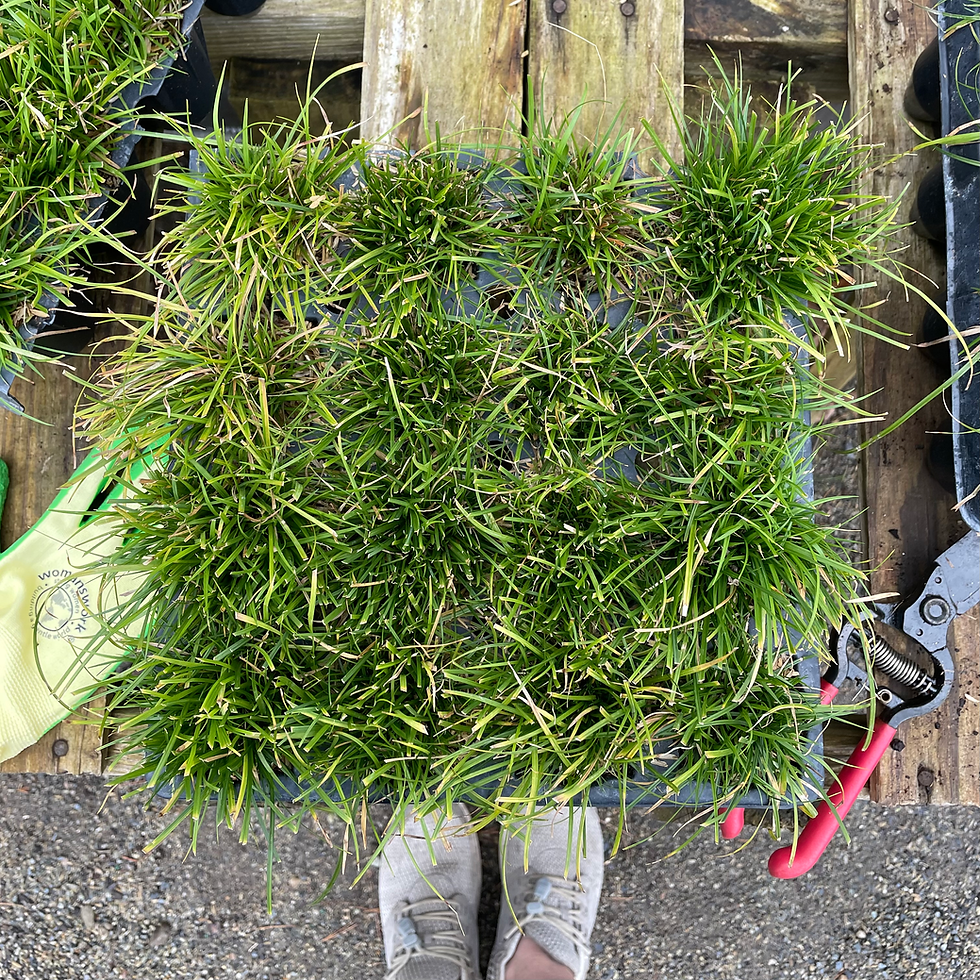
Join us in the greenhouse for plug potting!
It’s warm(ish), it’s earthy, and it involves actual dirt under your fingernails—without numb fingers or regret.
Plug potting is:
A hands-on way to help grow native plants
A great introduction to what goes into producing healthy, resilient natives
An excellent excuse to hang out with like-minded plant people
A guaranteed mood boost this time of year
We have a volunteer sign-up on our website, and all skill levels are welcome. If you can hold a plant and gently tuck soil around its roots, you’re qualified. When we are ready, we will send out an email and you can show up!
Come get some dirt on your hands, breathe in that greenhouse smell, and remind yourself that spring is happening…even if it’s taking the scenic route.
We promise: no frozen tuckuses involved.

**References for the smarty-pants:**
Does snow provide any soil fertility benefits?: Crop science us. Crop Science. (n.d.). https://www.cropscience.bayer.us/articles/bayer/does-snow-provide-soil-fertility-benefits
Mahmoud, H. H., Antwi, F. A., & Mahmood, T. H. (2025). Impacts of Snowmelt Recharge on Groundwater Table Fluctuations in a Cold Region Unconfined Aquifer. Earth, 6(4).
Emily K Studd, Amanda E Bates, Andrew J Bramburger, Timothy Fernandes, Brian Hayden, Hugh A L Henry, Murray M Humphries, Rosemary Martin, Bailey C McMeans, Eric R D Moise, Antóin M O'Sullivan, Sapna Sharma, Brent J Sinclair, Alex O Sutton, Pamela H Templer, Steven J Cooke. Nine Maxims for the Ecology of Cold-Climate Winters, BioScience, Volume 71, Issue 8, August 2021, Pages 820–830, https://doi.org/10.1093/biosci/biab032